Categories
article

APITable vs ClickUp: What Should I Choose For Work Management?

APITable and ClickUp are both work management and project management software, aimed at improving productivity for businesses, organizations, and teams.

But there are also differences between the two. Simply put, APITable emphasizes that it is a simple and powerful work management OS, while ClickUp emphasizes its completeness of features, claiming to replace all tools.

To make a better decision on tool selection, you can refer to the following information to distinguish the differences between the two. Of course, the best way is to try it out for yourself: APITable.com.

What is ClickUp?

ClickUp is a project management tool and productivity platform that helps teams collaborate and manage their work in one place. It provides a wide range of features such as task management, time tracking, project planning, team communication, and more.

The company claims that its product can perform more than 100 functions simultaneously, replacing numerous pieces of third-party software.

What is APITable?

APITable is an incredibly simple and powerful work management OS. No complex setup or training is required; you can get started with APITable instantly. With APITable, you can quickly create workflows and work systems to improve your team’s efficiency and collaboration. Over 2000 organizations worldwide have validated the universality and applicability of applications created with APITable across various industries.

From marketing, and CRM to HR, product development, and operation, APITable can build a work management system that meets your business development needs.

For example, keep workflows running efficiently with APITable’s automation, so you can monitor all of your ongoing marketing campaigns in real-time. Or, experience customized sales cycles, centralized customer management, automated sales processes, and many other aspects on one platform by APITable.

Underpinning all of this are APITable’s powerful features, which include:

  • Realtime Collaboration: Enables co-editors to edit one cell together and sync in real time for seamless teamwork and efficient project management.
  • Form Design: One-click, auto-generated, and extremely user-friendly Form.
  • API – first: Full-stack API access, from Data to Metadata.
  • Workflow Automation: Configure custom trigger-action workflows directly to save time from repetitive tasks.
  • Unlimited Table Links: Link unlimited tables on a single page without creating a “Base/App”.
  • Powerful Permissions: Columns / Rows / Files / Views can all be set with permissions as required by the role.
  • Extremely Extensible: Extend your APITable without limits with the customizable widget, dashboard, automated bots, and more.

APITable vs ClickUp: Major Similarities

APITable and ClickUP are both no-code/low-code tools that can assist in designing a project or work management system with simple operations. Of course, the most important points of agreement are in the following areas:

Rich view types

There are a variety of view options offered by both APITable and ClickUP, which allows users to view work in different ways.

APITable has 7 types of customizable views included, such as Table View, kanban View, Gantt View, Architecture View, Gallery View, and Calendar View which can help support task management and project management, offering more diverse formats of information presentation.

In addition, you can customize your own BI dashboard to show a comprehensive overview of your project or work, monitor progress, and make interventions.

Collaboration

APITable and ClickUP both provide a variety of methods for communicating and collaborating with team members.

In APITable, you can collaborate with team members in real-time and quickly assign tasks to any member. It also provides an instant commenting feature and station message notifications, so that work communication can be resolved quickly and centrally.

Workflow Automation

Workflow automation can help simplify the execution of repetitive tasks, especially in work management and project management, by reducing manual data entry and manual notification of message changes, enabling faster task delegation and progress. Both APITable and ClickUp offer relevant features to support workflow automation.

In particular, APITable provides various automation options to enhance efficiency. For instance, APITable supports Zapier integration, allowing you to connect APITable with over 5000 applications and create automated workflows using your most commonly used software tools in conjunction with APITable. For example, sync Mailchimp’s subscriber list in APITable, automatically send emails or Discord messages after creating a new record in APITable, and more.

You can refer to this article for specific instructions and recommended templates.

In addition, APITable also features automation robots that can integrate data from datasheets with various business systems and apps. These robots can automatically perform specified actions based on preset trigger conditions, helping you complete repetitive tasks and reduce your workload.

For example, when a task status changes, an automated message can be sent to a Slack channel to notify the relevant stakeholders. Similarly, when a new form entry is made, an automated email can be sent to the respective team member for further processing.

APITable also has a product feature that ClickUp does not have, which is Infinite Cross Link. Unlike other Low Code Software, including ClickUp, APITable is not a “Base/App” structure. You can link unlimited and infinite tables in one space. Synchronization of data across multiple tables streamlines workflow management and eliminates the need for redundant data entry when assigning and transferring tasks.

Now that we have discussed the differences between APITable and ClickUp, let’s dive into the notable distinctions between the two in the following section of the article.

APITable vs ClickUp: Differences

Even though APITable and ClickUp are excellent work management and project management solutions, they differ significantly from one another.

APITable vs ClickUp: Simple & Complicated

APITable features a user interface based on a flexible spreadsheet format that can be customized to suit various business needs. On the other hand, ClickUp is a comprehensive collection of applications that aims to replace common work software available in the market, offering a centralized platform for tasks, docs, chat, goals, and more.

Since ClickUp provides so many functional applications, it’s fantastic for project teams to be able to handle everything about project management and collaboration within ClickUp. But the fact that it has so many functions can lead to a waste of time and resources. For users who are using ClickUp for the first time, it takes more time to learn, and it is difficult to master.

APITable’s simplicity and flexibility enable it to operate similarly to Excel, allowing users to instantly get started without requiring complex setup or training.

The difference in product form may also be a factor in the consumer’s decision. Because ClickUp strives to cover all work linked and software replacement, you are likely to have to abandon existing work software and project management systems and re-establish a set of work methods and order. The choice of APITable, on the other hand, is much more flexible. Users have the option to utilize APITable either as an independent work and project management system or in conjunction with existing systems.

APITable vs ClickUp: How the API is used

One of the key focuses of APITable, as compared to other similar software tools, is its emphasis on being API-centric. Whether it’s data transfer between software applications or serving as a backend database to rapidly build product prototypes and validate ideas, you can leverage APITable’s API interface.

In addition, APITable’s One-Click API Panel provides seamless data retrieval and connection experience, making it a valuable tool for enterprises seeking to streamline workflows and enhance productivity. But in ClickUp, you need to download an app to test and work with APIs.

APITable vs ClickUp: Permission Management

As a collaborative tool, especially when dealing with tasks related to work and project management, robust permission management is an essential feature. However, ClickUp appears to be relatively weak in this aspect. Users with the highest-tier Enterprise version have exclusive access to customized permissions, custom roles, restrictions on public sharing, and other similar features. Even team space sharing and team support are subject to significant restrictions.

In contrast, APITable provides detailed permission management functionality. For example, it offers three different roles with varying editing, viewing, and management permissions. It allows you to assign specific permissions to individuals for different folders, tables, and even rows and columns. This enables you to have better control over centralized work and project information while effectively managing team collaboration and administration.

APITable vs ClickUp: Open Source and Freedom of Embedding

While ClickUp is undoubtedly an excellent project management software, it is not an open-source solution. For teams that prioritize autonomy and security, a self-hosted edition may be a more pressing need. But APITable both offers a Cloud Edition and an open-source Community Edition. It offers more flexible options for teams that seek data independence. You can deploy the APITable Community Edition in your own cloud and integrate it with existing systems/apps.

APITable believes that everyone should have their own work management OS.


Moreover, APITable’s freedom of development is also evident in its embedding feature. You can create custom personalized tables and dashboards using iframes and APIs. And that generates targeted embedded links to integrate APITable into any product or tool. This allows you to enhance the work management capabilities of your favorite tools or work systems, giving them more robust functionality.

In conclusion, APITable is a simple, ightweight, and Powerful Work & Project Management Tool Worth Considering. It caters to your needs for flexible customization, independent security, and easy adoption, providing great assistance to team collaboration and work efficiency. Try APITable today

Categories
article

APITable: Simplifying Requirements Management for Easy Delivery

Requirements management is an important part of project management. In the previous article, you might have learned about the general advantages of APITable as a project management tool. So, how can APITable help you when you encounter difficulties in the requirements management process?

We all know that the requirements management process includes requirement gathering, requirement analysis, requirement review, and requirement tracking. Any failure in any of these steps can result in budget overruns, decreased quality, and delayed schedules.

You need a good requirements management tool that can help you organize and classify requirement information more effectively, making it easier to understand and analyze, thus improving project management efficiency and accuracy. At the same time, it should also help you to reduce the burden on process standardization and automation.

This article will show you the exceptional features of APITable as a requirements management tool, providing you with an all-in-one, comprehensive, concise, easy-to-use, and automated requirement management solution.

Full process control of requirements management

Form, datasheet, document, board… Have you switched between too many tools during the requirements management process? In APITable, all processes, from requirement gathering to review, to delivery tracking, can be controlled at one station throughout the entire cycle.

(1) Requirement gathering

Users can easily convert a datasheet of requirements into a form and generate a requirement collection form with the assistance of APITable’s form. The form automatically summarizes form records submitted from different sources into the requirement datasheet, eliminating the need for secondary sorting.

(2) Requirement analysis and review

With APITable’s rich field types (such as Single line text, Select and Multi-select, Date, Attachment, etc.) and powerful filter and group functions, you can intuitively organize requirements at the first time.

With just one click on a single requirement record, you can clearly see all the processes related to that requirement: the proposer of the requirement, requirement details, user demands, estimated working hours, priority, etc.

Smooth multi-person real-time collaboration and commenting functions allow the team to communicate about individual requirement records during the requirement review process and finally evaluate the next action for the requirement.

(3) Requirement allocation tracking

Once the requirement is decided upon, the question of who will do it and how arises. Users can cross-link data between datasheets with the assistance of APITable’s “Magic Link” and “Lookup” functions.

Linking the requirement datasheet with the task datasheet and the team member datasheet can achieve a one-to-one correspondence between the requirement and the task, as well as the requirement and the executor, making it easy to track and manage, and avoiding confusion.

Requirement progress visualization

In addition to managing and allocating requirements in datasheets, you can also visualize requirement progress with APITable’s powerful view function, allowing you to quickly understand the current state of requirements and keep up with the pace.

Users can switch both the requirement datasheet and the task datasheet to various view forms, such as Kanban view, Gallery View, and Gantt view.

In the Kanban view, you can easily drag single requirement and task records to quickly adjust the status of requirements/ tasks.

Using the Gantt chart to track task progress in real-time, you can understand the urgency of requirements/ tasks through progress bars of different colors.

The calendar view allows you to stand at the time dimension and examine the rhythm of requirements/ tasks.

In addition, you can use dashboard and chart applets and other functions to build BI data screens, visually displaying project progress and completion.

Automated assistance for requirements management

When you feel satisfied with using APITable’s datasheet for straightforward and intuitive requirement management, you might not think of getting the support of automated capabilities, which makes the whole process even easier.

Automated Notifications

With APITable, it’s easy to visually track the flow of demand tasks. However, you can’t keep an eye on it 24/7 when you have other work to do.

How can you quickly receive notifications about demand changes, task status updates, and warnings that demands are about to expire? By leveraging APITable’s automation capabilities, you can achieve efficient information dissemination and communication.

send a message to Discord channel when a new record is created

You can use the Robot to push demand change notifications to your email or Slack in a timely manner based on pre-set trigger conditions.

You can also connect APITable to Slack, email, Discord, Microsoft Teams, and other applications through Zapier to achieve automatic notifications.

send a custom email when a new record is created

This greatly improves the efficiency of demand flow.

Automation Across Departments

A demand usually requires the cooperation of multiple departments, such as corresponding UI design requirements for functional development requirements. Repeated form-filling and unsynchronized information can sometimes bring confusion and trouble.

But with APITable’s Robot or Zapier integration, you can synchronize and update data across datasheets. Users can automatically write or reuse data from one datasheet in another datasheet, enabling a more flexible and automated association and integration into the overall workflow, thereby streamlining cross-departmental information synchronization.

More Automation Scenarios

APITable’s automation applications go far beyond this. In fact, APITable’s open API interfaces combined with Zapier can connect you to hundreds or thousands of third-party applications and services, expanding demand management, project management, and even complete work management system scenarios. For example, connecting to NPS can make demand feedback and changes more directional.

More application scenario connections require you to explore and discover based on your actual work.

APITable is a simple and powerful work management OS that is proficient in managing project management and even more detailed requirements management scenarios. If you want to use fewer and simpler tools to quickly improve requirements management efficiency, try building your requirements management system with APITable to help requirements management achieve more efficient, accurate, and reliable workflows, thereby improving project management efficiency and quality.

Categories
article

APITable vs. Asana: Exploring the Key Differences

Looking for a project management and team collaboration tool? APITable and Asana are two highly-rated options. But which one is right for you? In this article, we will compare the features and advantages of APITable and Asana. Regardless of the size of your project, this guide will help you make an informed decision.

Our guide provides some insights, or you can get started with apitable.com for free.

Here is the difference:

When comparing Asana and APITable, there are several key differences to consider:

  • Asana offers a structured, defined project management model, while APITable is a free, highly customizable work management OS with an extremely simple, intuitive user interface, and powerful capabilities, and allows for quick mastery of work management at zero learning costs.
  • Asana solely provides a cloud-based solution, while APITable offers the versatility of both cloud and open-source options.
  • Asana focuses primarily on goal and project management, whereas APITable provides a variety of optional templates and solutions for any scale business.
  • APITable stands out with its detailed access controls and affordable pricing.

What is APITable?

APITable is an Incredibly Simple and Powerful Work Management OS, enabling everyone to effortlessly collaborate on organizing goals, projects, and data.

With APITable, teams can integrate seamlessly with relational databases and create custom workflows, operating systems, and business models using a simple drag-and-drop interface. This allows teams to focus on what’s important while APITable takes care of the rest.

Unlike other project management tools such as Asana, APITable is not just a tool for managing tasks, but also provides a flexible architecture for connecting business data. It is perfect for managing a variety of tasks such as project management, sales, marketing, or customer relationships. APITable enables teams to create and connect the tools they need to run projects and processes in one place.

APITable offers Cloud and Community editions tailored to suit your specific needs. Trusted by over 20,000 organizations, APITable serves as a powerful and flexible work OS that empowers businesses of all sizes. Why not give APITable a try and witness its transformative impact on your projects and data management?

Key features and benefits of APITable

APITable is an Incredibly Simple and Powerful Work Management OS with powerful features for managing tasks across industries, including:

  • Real-time collaboration, which enables co-editors to edit one cell together and sync in real time for seamless teamwork and efficient project management.
  • Automatic forms for easy data collection from external parties.
  • Seven view types, from Grid, Gallery, Architecture, Form, Kanban, Gantt to calendar views, provide flexible data visualization.
  • Customizable dashboard for clear business display.
  • User-friendly API panel that can be opened with just one click allows for easy data access.
  • Fine-grained Permission Control, in which columns/Rows/Files/Views can all be set with permissions as required by the role.
  • Embeddable platform for easy access and ideal for businesses of all scales.

What is Asana?

Founded in 2008 by a Facebook co-founder and ex-Google engineer, Asana was designed to streamline team organization and project tracking. It empowers teams to work together and track progress towards their goals.

Asana is a powerful tool for managing tasks and collaborating with your team. It is ideal for teams looking to set goals, break down projects into manageable tasks, track progress, and meet deadlines. With its intuitive interface and robust feature set, Asana is a great choice for businesses of all sizes.

APITable vs Asana: A Customizable Tool vs. a Rigorous Project Management Model

Asana is a well-established project management tool with a defined project management model that provides a clear task-tracking method and a smooth user experience, making it easy for teams to collaborate on projects.

However, for those seeking a more customizable and flexible tool, APITable is an ideal solution. APITable is a hybrid of spreadsheets and databases, making it a versatile tool for data management and creating business models. You can tailor the tool to meet their specific needs, creating custom workflows and automating repetitive tasks.

This level of flexibility can be especially beneficial for businesses with unique processes or requirements that can’t be easily accommodated by off-the-shelf solutions like Asana. With APITable, you can streamline workflows, reduce tool redundancy, and improve productivity.

APITable vs Asana: Advanced vs. Basic Permission Management

Effective permission management is crucial when selecting a project management tool. Asana provides basic permission control based on projects, teams, tasks, access, and editing. However, this permission model may not be sufficient for teams that require collaboration across departments.

APITable, however, offers a more powerful permissions system and the ability to define custom identity groups for table members based on their visibility and editing permissions. This powerful feature is particularly valuable for teams working across multiple departments where confidential information cannot be shared in a single project.

APITable vs Asana: Custom-Tailored Dashboards vs. Basic Reporting

Reporting and analytics are essential for tracking progress and measuring success. Asana’s reporting focuses on tracking task completion, such as how long individual tasks take to complete. While Asana offers BI integration, it is limited to subscription plans and requires additional software.

In contrast, APITable offers custom reporting and flexible interfaces that use your data to create custom-tailored, shareable dashboards. Additionally, APITable’s Extensible Widget System enables integration with third-party reporting tools, such as Salesforce and Tableau, for even broader functionality.

APITable vs Asana: Linked Records vs. Separate Data

Asana allows users to associate one task with multiple projects, while APITable offers the capability to sync data from multiple tables and external sources. This feature is particularly useful for managing complex data structures and relationships.


When it comes to managing complex data structures and relationships, linked records are a game-changer. Asana’s approach allows users to associate one task with multiple projects, but it falls short of managing data across tables or external sources.

APITable, on the other hand, offers the capability to sync data from multiple tables and external sources, creating a more comprehensive and interconnected view of your data. With linked records, you can easily navigate through your data and visualize the relationships between different tables. This makes it easier to manage your information and make informed decisions. This feature is especially useful for teams that rely on data-driven insights to achieve their goals.

APITable vs Asana: Embedding All Your Tools Seamlessly or Adding Another Tool

Integration and compatibility with other tools are crucial factors to consider when choosing a project management tool. Asana provides optional solutions to help users manage goals and projects efficiently. However, it does not support open source, making it challenging to integrate with other tools.

APITable is a cloud and open-source work-OS that can be embedded into any product or tool using iframes and API functions. Its open-source edition can also be deployed on your server with one click, ensuring data security and reducing tool redundancy.

APITable vs Asana: Affordable

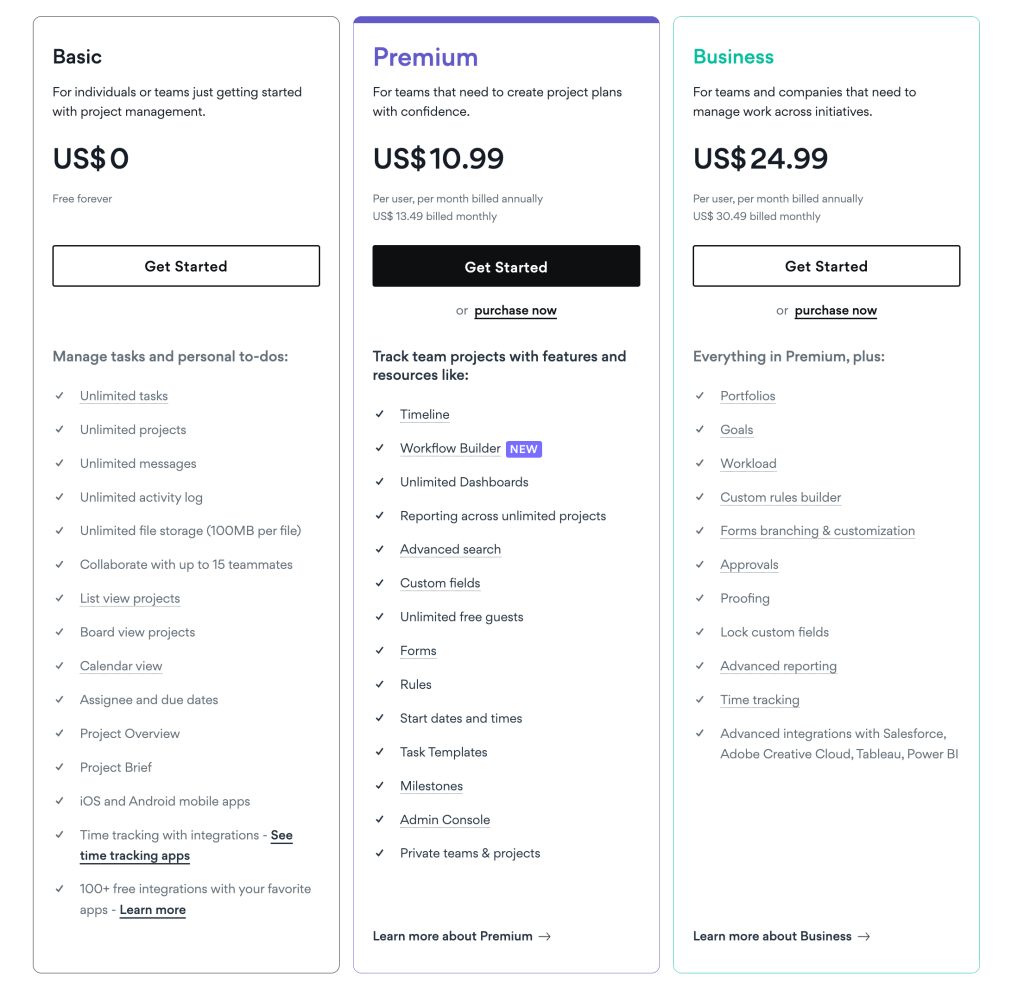
When selecting a project management tool, it is crucial to take pricing into account. Additionally, in cases where the price of plans is comparable, APITable offers significantly better value for money, approximately 200% more than Asana.Here’s a breakdown of both platforms’ pricing plans:

In conclusion, APITable is a powerful project management tool that offers a range of features to help teams collaborate more effectively.

If you’re looking for an affordable and powerful project management tool, APITable is an excellent choice. Its customizable and flexible features make it easy to use and fit your team’s unique requirements. Try APITable today.

Categories
article

10 APITable x Zapier Templates To Help Your Team Work Smarter

Spend too much time on repetitive tasks? Or struggling to efficiently deal with multiple software services and associated data?

Automate repetitive tasks and save time with Zapier‘s APITable integration. Connect to over 5000 apps without any code and focus on important tasks. 

Here, boost your productivity with these 10 Zapier templates for APITable:

  • Add new APITable records to another datasheet
  • Add new MailChimp subscribers to APITable
  • Send emails in Gmail when new records are created in APITable
  • Create Google Calendar events from new APITable records
  • Send messages to Discord for new APITable records
  • Send Slack channel messages for new APITable form submissions
  • Add new customers in Stripe to APITable
  • Add new Salesforce records to APITable
  • Create APITable records for new WordPress posts
  • Send channel messages in Microsoft Teams for new APITable form submissions
10 APITable x Zapier Templates To Help Your Team Work Smarter

If you’re not familiar enough with Zapier to know what it can do in combination with APITable, you can jump ahead by clicking on the section names below:

  1. What is Zapier?
  2. What can Zapier + APITable do?
  3. How to connect Zapier with APITable?

Zapier + APITable Templates

1. APITable x APITable

If you are managing two APITable datasheets with linked data, you don’t have to copy and paste the transport manually, you can use Zapier to link the two datasheets together. When there is a new record in one of your APITable datasheets, this integration will add it to another datasheet automatically.

Try the APITable x APITable zap by clicking here.

10 APITable x Zapier Templates To Help Your Team Work Smarter

2. APITable x MailChimp

If you are using MailChimp for email marketing, you can use Zapier to automatically add your subscriber information to APITable for management. You can store and manage your subscriber details without manual data entry.

Try the APITable x MailChimp zap by clicking here.

10 APITable x Zapier Templates To Help Your Team Work Smarter

3. APITable x Gmail

If you are using APITable for work management and want to notify relevant parties when a new task is created in the demand form, you can use Zapier to automatically send a custom Gmail email to them when a new record is created in APITable.

Try the APITable x Gmail zap by clicking here.

10 APITable x Zapier Templates To Help Your Team Work Smarter

4. APITable x Google Calendar

When you set the start time for your task in APITable, you can use Zapier to automatically create a corresponding new schedule in Google Calendar for comprehensive time management.

Try the APITable x Google Calendar zap by clicking here.

10 APITable x Zapier Templates To Help Your Team Work Smarter

5. APITable x Discord

If you want to keep your team updated on data updates in real time, you can use Zapier to send a message to your Discord channel when a new record is created in APITable. This allows you to collaborate more effectively and stay on top of important changes in data. For example, you can use this workflow to notify your team of information about new customer orders and coordinate your execution or customer service work.

Try the APITable x Discord Zap by clicking here.

10 APITable x Zapier Templates To Help Your Team Work Smarter

6. APITable x Slack

When there is a new form submission in APITable, Zapier can automatically send a notification message to your selected Slack channel. This allows you to easily notify your team without any manual operations. This Zap has high utilization for notification scenarios such as business processing and work order dispatch.

Try the APITable x Slack Zap by clicking here.

10 APITable x Zapier Templates To Help Your Team Work Smarter

7. APITable x Stripe

If you are using Stripe’s online payment service, you can track and manage your customer data in APITable through Zapier without stopping manual updates. Set up this Zap, and a record will be automatically created in APITable whenever there is a new customer in Stripe.

Try the APITable x Stripe zap by clicking here.

10 APITable x Zapier Templates To Help Your Team Work Smarter

8. APITable x Salesforce

If you use Salesforce to manage your sales pipeline, you can use Zapier to add new opportunities to APITable automatically. This allows you to combine your Salesforce data with other sources, such as customer feedback or website analytics, to get a more comprehensive view of your sales performance.

Try the APITable x Salesforce zap by clicking here.

10 APITable x Zapier Templates To Help Your Team Work Smarter

9. APITable x WordPress

If you are using WordPress to run a blog or website, you can use Zapier to automatically create a new record in APITable when a new post is published. This allows you to track all content in one place and analyze it more effectively.

Try the APITable x WordPress zap by clicking here.

10 APITable x Zapier Templates To Help Your Team Work Smarter

10. APITable x Microsoft Teams

When there is a new form submission in APITable, Zapier can automatically send a notification message to your selected Microsoft Teams channel. This allows you to easily notify your team without any manual operations.

Try the APITable x Microsoft Teams zap by clicking here.

10 APITable x Zapier Templates To Help Your Team Work Smarter

Learn More About Zapier

What is Zapier?

Zapier is a well-known third-party integration platform in the automation field that allows you to build custom workflows. Without code, Zapier can connect APITable to over 5000 applications and services, including MailChimp, Google Sheets, Calendly, Slack, and more, to handle automatic data transmission between them, automate work, and free you from manual and repetitive tasks.

The automated workflow you build in Zapier is called a “Zap.” Each zap contains a trigger step and one or more action steps. When you publish a zap, it runs the action steps each time a trigger event occurs. For example, when you create a new record in APITable (trigger step), Google Calendar can automatically create a corresponding schedule (action step).

What can Zapier + APITable do?

APITable is a simple yet powerful work management OS and a visual database that offers flexible and diverse ways to manage data and tasks. After connecting it to other applications and services through Zapier, APITable can better collect and manage data information, create items, tasks, data, etc., and build automated workflows with other applications and services to make work management easier. For example, sync Mailchimp’s subscriber list in APITable, automatically send emails or Discord messages after creating a new record in APITable, and more.

10 APITable x Zapier Templates To Help Your Team Work Smarter

The method of implementation is just thinking about the application scenarios of various applications and APITable, and spending a few minutes creating a zap.

How to connect Zapier with APITable?

In this section, we will show you the specific steps to connect Zapier with APITable through a simple example.

Before that, please make sure that you have an APITable account and a Zapier account.

A Zap contains at least one trigger and one action, and APITable can act as both a trigger and an action. In the following example, APITable will act as both the trigger and the action, and it can automatically add corresponding data to another table when a new record is added to a table in APITable.

10 APITable x Zapier Templates To Help Your Team Work Smarter

This is a common scenario we often encounter in our work, such as when a new requirement is added to the development requirements pool, which leads to new design requirements that need to be added to the design department’s requirements pool, and you need to enter the relevant information in the design requirements pool again. With this Zap, you can avoid duplicate data entry, improve data correlation and synchronization, and solve automation problems.

Step 1: Create a Trigger

Create a new Zap in the Zapier backend, select APITable as the application in the trigger, and then select the event you want from the list.

Currently, APITable supports the following operations as triggers:

  • Triggers when a form is submitted and received, the zap will start running.
  • Triggers when a new record is created in the datasheet, the zap will start running.

Then bind your APITable account by obtaining the API token from your APITable account. You can refer to this article for how to obtain it.

You can then begin to set up your trigger operation by selecting the specific table, view, and corresponding fields. The article has already introduced the methods for obtaining the Table ID and View ID.

After a successful test run, you can proceed to the next step.

Step 2: Set Up Your Action

Select APITable as the application in the action, and then select the event you want from the list.

Currently, APITable supports the following operations as actions:

  • Create a new record
  • Update a record
  • Find a record

Still, bind your APITable account and set up specific actions, such as selecting where to update data in a new table and view, and which data fields in Table A correspond to which data fields in Table B.

After filling in the information, test run it, save it if successful, and open the Zap. Now, when you update a record in Table A, a corresponding new record will be automatically generated in Table B, making it simple and automated.

We have already set up the Zap template for you. Click here to experience it.

If you’re eager to try using Zapier + APITable to create your own automation workflows, take action now.

Categories
article

APITable vs. Airtable: What’s the Difference?

Both APITable and Airtable are no-code databases that blend spreadsheets and databases, allowing individuals and organizations to customize workflows and collaborate seamlessly. While the two products share many similarities, there are some differences in design concepts and their origins.

In summary, Airtable is known for its automation and integration capabilities, while APITable focuses on seamless connectivity and collaboration.

To shed some light on the comparisons between the two, you can refer to the following information or get started with APITable.com today.

What is Airtable?

Airtable is a low-code platform for building collaborative apps that enable businesses to customize workflows and collaborate on various aspects, such as project management, content management, and sales data management.

What is APITable?

APITable is an incredibly simple and powerful work management tool that allows everyone to create workflows and systems to empower teamwork. It can be customized to suit any business industry, and over 20,000 organizations rely on APITable.

From project management to CRM, sales, and marketing, APITable enables teams to create and connect the tools they need to run projects and processes in one place. APITable provides Cloud and Community editions for any security needs.

Key features and benefits of APITable

APITable is simple to use and provides a wide range of amazing features, including:

  • Real-time collaboration, which enables multiple users to edit one cell together and sync in real time
  • Automatic forms, which allow you to collect data from suppliers, freelancers, or other people outside your organization
  • Seven view types, from Grid, Gallery, Architecture, Form, Kanban, Gantt to Calendar views, provide seven tools to present your work
  • Dashboard customization, which allows you to customize your business and display them clearly
  • API-first panel, enables you to get the datasheet code in one click
  • Fine-grained Permission Control, in which columns/Rows/Files/Views can all be set with permissions as required by the role.

Among APITable’s key features are embedding, cross-table links, and record count, which make it stand out from Airtable.

What are the advantages of using APITable?

  • APITable is better for project management, content marketing, CRM, OKR management, and more.
  • APITable provides most of the organizational structure and permission management necessary for most enterprises.
  • With an open-source edition, APITable supports one-click deployment and embedding into enterprise systems.
  • It is an easy-to-use API panel in APITable that only requires a single click.
  • Based on a price comparison on the same feature level, APITable offers the best value for money.
  • APITable’s Pro plan supports up to 20 million records per space without ‘base’ limitation.

APITable vs Airtable: Incredibly Simple and Intuitive

As an innovative alternative to traditional spreadsheets, APITable boasts a sleek user interface that is both refined and intuitive.

Its file-folder structure is a familiar approach that is easily understood by anyone, simplifying the process of data management and collaboration.

Additionally, its one-click API panel offers a seamless experience for data retrieval and connectivity, making it a valuable tool for businesses seeking to streamline their workflows and improve their productivity.

With its highly flexible and easy-to-use interface, APITable empowers teams to collaborate more effectively, and offers an excellent solution for businesses of all sizes looking to optimize their data management processes.

APITable vs Airtable: Data-Flow-Friendly Directory Tree Structure

One of the most significant differences between these two products is the user interface.

Workspaces in Airtable can have multiple bases, and each base represents a project. For example, if your project is “Design Projects”, you can use multiple tables to represent different focus areas such as project overview, tasks, clients, etc.

However, if you want to check on the progress of customer delivery projects, you need to navigate away from the “Design Projects” base and switch to the “Customer Deliver” base.

This is not very user-friendly for those who need or prefer a project overview. In APITable, all projects are within the same workspace, so you can view all your projects without leaving the base.

Projects are arranged in a neat tree folder structure, which provides team leaders with better control than what Airtable can offer.

Neatly arranged projects are not the only benefit. Thanks to this data-flow-friendly tree structure, you can get more data correlations.

APITable vs Airtable: Unlimited cross-table links with no ‘base’

Are you tired of limited cross-table linking in Airtable? With APITable, you can connect tables without limitations, reshaping bases as folders within a single workspace. You can link your marketing campaigns to design projects and connect your designers to company-wide sharing events.

APITable’s magic-link feature offers unlimited connections and enables close collaboration. Plus, with no “base” limit, you can interlink as much data as you want throughout the entire space.

In contrast, Airtable’s Pro plan has a limit of 50,000 records per base, whereas APITable’s Pro plan allows you to interconnect up to 20 million records of data in one space.

Choose APITable for seamless collaboration and unlimited cross-table linking.

APITable vs Airtable: Enhanced Access Control for Better Data Separation

When it comes to permissions and access control, APITable offers a more fine-grained approach compared with Airtable.

In APITable, the main administrator of the workspace has the highest authority and can assign multiple sub-administrators to assist in the management of permissions. Regular members can have different reading and editing permissions, and file operations are also managed at different levels of authority.

You can set permissions individually for a table or a column, which allows for better data separation and collaboration among team members.

In contrast, Airtable only offers permissions classified by action, including owner/creator, editor, commenter, and read-only.

This means that APITable’s granular permissions provide more detailed and customizable access control. By using APITable, your project and business data can be centralized yet independent, allowing for better collaboration and orderly management.

APITable vs Airtable: More Openness

Airtable is a well-established product with a diverse range of applications. However, it lacks a self-hosted edition, which may be a deal-breaker for some users.

On the other hand, APITable offers both Cloud and Community editions, making it a flexible option for teams that want more control over their data.

As an open-source project that gained over 7,000 stars on GitHub within 8 weeks of its launch, the APITable Community edition can be deployed in your own cloud and integrated with existing systems/apps.

Moreover, APITable has the upper hand on embedding with its open APIs and customizable dashboards. APITable offers the ability to create highly customized and personalized tables through its API, giving users the power to hide sidebars, tag bars, toolbars, and even choose a theme color.

And with the ability to create embedded links to dashboards via API, it’s easy to add a beautiful data dashboard to your system in just a few clicks. These features give APITable a clear advantage over Airtable in terms of customization and embedding capabilities.

In short, Airtable gives you inspiration for connection, while APITable gives you a deeper integration experience.

APITable vs Airtable: Affordable and Feature-packed

APITable offers a range of pricing plans that cater to teams and businesses of all sizes, making it a more flexible and user-friendly option. Additionally, for plans that are similar in price, APITable’s value for money is 200% better than Airtable’s.

Here’s a breakdown of both platforms’ pricing plans:

In summary, if you are looking for a flexible and cost-effective work OS for managing your workflow and projects, APITable is a strong alternative to Airtable. Its open-source option allows for greater control and integration with your existing systems and applications.

Additionally, the ability to fine-tune permissions and access makes it an excellent choice for team collaboration. With its more affordable pricing model, APITable is a great choice for businesses of all sizes.

With APITable, you can enhance team collaboration, streamline workflows, and boost productivity. So why not sign up for a free account today and see how it can benefit your organization?

Please leave your contact information first.